
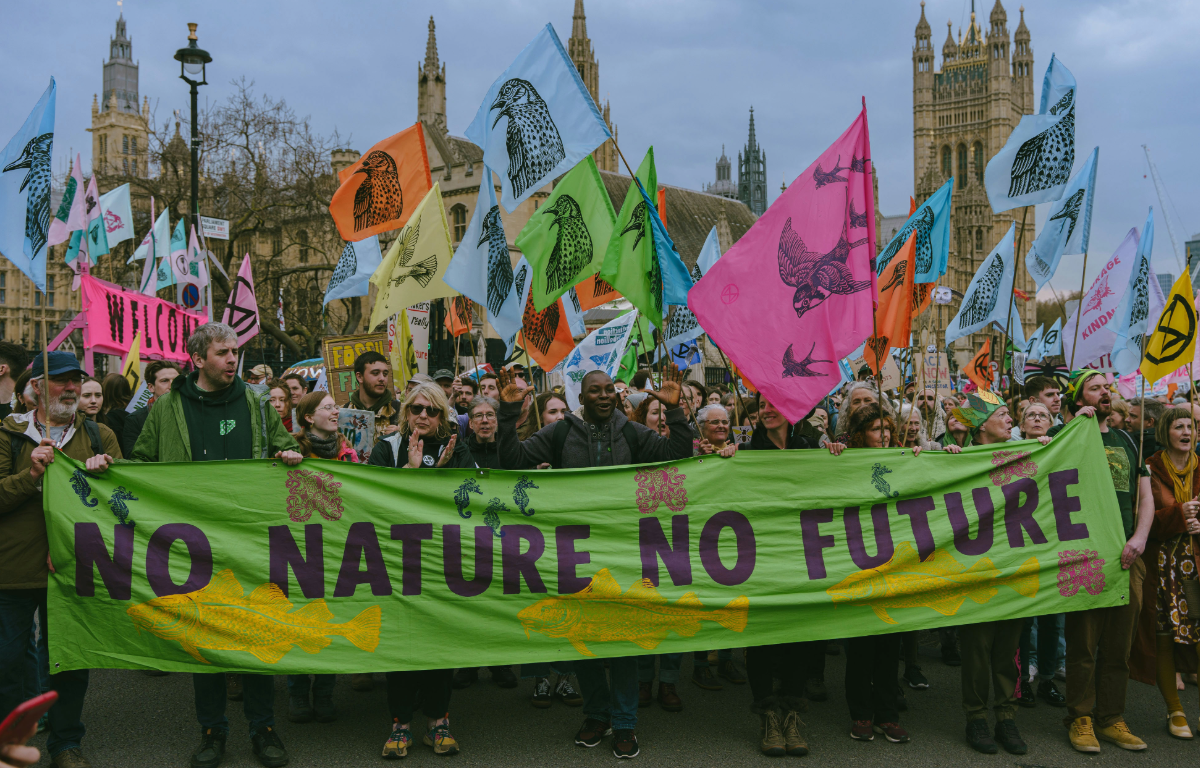
Where should we begin the conversation on ecocide?
We can begin with the end.1
This article re-examines the international legal framework for the protection of nature through the lens of a human rights approach, with particular attention to the human right to a healthy environment. It examines the doctrine of intergenerational equity, focusing on the rights of future generations, and explores examples of the protection of these rights in Hungary. In addition, it reconsiders the colonial approach to the role of nature in the USSR, which led to the Chornobyl disaster and, consequently, to the criminalisation of ecocide at the national level in several countries.
Following the publication of the first scientific papers in the early 1960–1970s, revealing the negative consequences for nature, attention to environmental issues increased considerably. The initial responses reflected two markedly different trends: (a) environmental alarmism, closely related to environmental pessimism, which predicted the collapse of civilisation as a result of ecological disaster; and (b) environmental conformism, or environmental optimism, which maintained that financial and technological means could readily resolve environmental challenges.2
Climate change differs from other environmental issues, such as solid waste, water pollution, or erosion, because it combines three distinctive characteristics: (1) its inherently global nature, despite the uneven distribution of causes and effects; (2) its close connection to a fundamental feature of modern economic systems—energy consumption; and (3) a high degree of uncertainty regarding its consequences across different regions.3
By the 1970s, the environmental movement had evolved beyond its initial phase, focusing primarily on practical resource conservation initiatives, such as establishing national parks. It had become a far more active political and social force, inspired by a new generation of thinkers and activists who pursued social and political transformation alongside the peace, civil rights, and women’s movements, all of which demanded new conceptions of justice and new legal structures.
Several figures within this movement, such as Rachel Carson, provoked controversy by attributing the ecological crisis to long-standing traditions of the Western Enlightenment, to humanistic, scientific, industrial, and technological thought, all of which they regarded as fundamentally flawed. Since then, environmental ethics has primarily focused on the moral principles guiding the protection of non-human beings, the normative foundations of laws safeguarding endangered species, and the ethical justifications for preventing and restoring environmental degradation.4 This relatively new branch of philosophical ethics examines the values inherent in non-human living beings and proposes corresponding ethical responses aimed at their preservation or restoration.5 Environmental ethics can serve as a foundational worldview that enables a deeper understanding of humanity’s relationship with nature and the living world, encouraging a rethinking of the role of both humans and nature and the permissible limits of anthropogenic influence. Ethics emerges in response to threats posed by human activity—threats that endanger humanity and the broader non-human living world, that is, all communities of life on Earth. Whereas early attention to environmental issues primarily emphasised the protection of future human interests, it later expanded to include reflections on the intrinsic role of nature in human life and broader questions concerning the autonomy of nature from humanity. Nature attains moral significance as it provides the essential resources for creating and sustaining human communities. Thus, it may be regarded as unjust when one human community enjoys greater access to resources commonly shared—such as air, water, or soil—than another.
Environmental scholars such as Andrew Light and Holmes Rolston have paid particular attention to the role of non-human entities in environmental issues—animals, plants, and all living beings—as they bear the most direct impact of human interference in nature; yet, unlike humans, their interests are often neglected in considerations of protection.6 Light and Rolston have suggested that the interests of these groups be considered on an equal footing, which does not imply treating them as humans, nor that their lives hold equal value—human life is traditionally regarded as having precedence.7 When the interests of two groups are equally important, they should be considered equally. From this perspective, we cannot deny the existence of direct moral obligations toward members of other biological species.
Since the mid-1980s, research, publications, and teaching in the field of environmental ethics have grown rapidly and continue to develop.8 As a result, concepts of environmental justice gained increasing significance. During the 1970s and 1980s, a substantial body of literature emerged on this topic, as scientists, environmental activists, and community organisations called for greater attention to environmental justice across government, economic systems, society, and individual practices.
This body of scientific research and activism paid limited attention to the role of law or the reform of environmental legislation. The deep ecology movement sought to develop a comprehensive, alternative worldview and way of life grounded in the equality of all life forms and the rejection of all forms of domination, particularly human domination over nature. Social ecologists, by contrast, emphasised the effects of social hierarchies—i.e., domination over other humans—on environmental health.9 The animal rights movement contributed to the debate by advocating for the extension of justice beyond the human species, while ecofeminists highlighted the interconnections between patriarchy, environmental degradation, and social injustice. Nonetheless, not all commentators agreed that, in a “postmodern” world composed of heterogeneous and often contradictory societies, it is feasible to establish shared conceptions of environmental justice.10
Simon Caney has developed an approach to understanding climate change through the framework of human rights. He argues that analysing the impacts of climate change from a human rights perspective offers several fundamental advantages over other prevailing approaches.11 According to Caney, climate change poses threats to three fundamental human rights: the right to life, the right to health, and the right to subsistence (the latter refers to everyone’s right to an adequate standard of living for themselves and their family, including adequate food; the right to life is understood in the traditional sense, as climate change creates direct and indirect threats to human life e.g., extreme weather, famine, disease).12 Within this framework, Caney highlights several key challenges. First, it necessitates a selective approach to the consequences of climate change, focusing specifically on those impacts that infringe upon human rights rather than attempting a comprehensive assessment. Second, those affected by human rights violations are entitled to compensation. Third, this approach shapes not only the evaluation of climate change impacts but also the allocation of responsibilities for safeguarding threatened human rights. Consequently, the human rights perspective generates obligations to mitigate and adapt to climate change, and, given the ongoing climate crisis and the likely insufficiency of adaptation measures, it also implies obligations to provide compensation.13 Furthermore, in accordance with the principle of non-discrimination, the effects of a country’s activities on the rights to life, privacy, or property in other countries must be recognised and appropriately considered in the decision-making process.14
This approach can be applied not only to assess the consequences of climate change but also to evaluate the broader negative anthropogenic impacts on the environment and ecosystems. While global human rights systems are not yet prepared to adopt a fully ecocentric framework in the development of legal instruments, integrating ecocentric principles with a human rights approach could advance the short-term goal of recognising ecocide as a serious international crime. In the longer term, this may pave the way for developing a new human rights system oriented toward environmental protection.
Іnternational Legal Framework for Environmental Protection
From an ontological perspective, the period preceding the adoption of the 1972 Stockholm Declaration can be characterised as a phase of novelty for environmental rights—a time when such rights were regarded primarily as moral imperatives that extended beyond the confines of traditional international law. The 1972 Stockholm Declaration, in turn, marks the ontological beginning of the formation stage of the right to a healthy environment. From the standpoint of a traditionalist approach to international law, however, the right to the environment remains a developing right, still awaiting formal recognition by states before attaining full legal status.15 The Declaration became a legal milestone in which the international community acknowledged the emergence of a human right to a healthy environment—though it did not explicitly name this right, instead emphasizing the link between environmental quality and the enjoyment of human rights: “for the purpose of attaining freedom in the world of nature, man must use knowledge to build, in collaboration with nature, a better environment. To defend and improve the human environment for present and future generations has become an imperative goal for mankind—a goal to be pursued together with and in harmony with the established and fundamental goals of peace and of worldwide economic and social development.”
Over 100 countries have enshrined the right to a healthy environment in their constitutions and have incorporated it into national legislation. International relations have similarly evolved to recognise the environment as a key concern on the global agenda. Numerous international treaties—from the Convention on the Elimination of All Forms of Discrimination against Women (1979) to the United Nations Convention on the Law of the Sea (1982)—have implicitly acknowledged the human right to a healthy environment, integrating principles of environmental conservation, protection, and preservation into their legal frameworks. Moreover, most regional human rights instruments explicitly recognise the human right to a healthy environment, including the ASEAN Human Rights Declaration, the Arab Charter on Human Rights, the Aarhus Convention, the San Salvador Protocol to the American Convention on Human Rights, and the African Charter on Human and Peoples’ Rights.16
Since the Vietnam War, the issue of the prohibited use of weapons that cause environmental damage, as well as the broader negative impacts of such activities, has gained increasing significance. This concern has become a central topic at scientific conferences and in reports, leading to the adoption of new international conventions, such as the Convention on the Prohibition of Military or Any Hostile Use of Environmental Modification Techniques,17 which was approved in 1976 by the UN General Assembly resolution 31/7218 in response to international concern over the use of military tactics that could manipulate and damage the environment.19
Later, the African Charter on Human and Peoples’ Rights in 1981 declared the right to a generally satisfactory environment favourable to their development; the Convention on the Protection of the Environment through Criminal Law in 199820 added definitions for the adoption of environmental criminal offences; the Rio Declaration of 1992 concluded that “environmental protection shall constitute an integral part of the development process and cannot be considered in isolation from it,21 while also noting the environmental needs of present and future generations”; this declaration is also referred to as the Framework Convention on Climate Change.
Scholar Henry Shue criticises the results of the Rio conference for failing to set clear numbers: “no dates, no dollars”; it does not specify by what date wealthy countries must reduce emissions, nor does it specify what financial resources these countries will use to help poor countries avoid the environmentally dirty development that they themselves experienced.22 According to Shue, the convention represents a valuable starting point for further discussions on climate change, but, due to the absence of enforcement mechanisms, it is not an effective instrument. Similarly, the subsequent Copenhagen Convention repeated this shortcoming, functioning more as a declaration of intent than a binding commitment to implement necessary measures.
The Aarhus Convention of 1998 provides that the effective exercise of environmental rights requires the guarantee of access to information, public participation in decision-making, and access to justice in environmental matters.23 The human right to a healthy environment, first mentioned in 1972, and developed for the enjoyment of humanity and future generations, went through its establishment by the instruments of soft law. The Aarhus Convention represents a significant extension of environmental and human rights law, as illustrated in the case of Tashkin v. Turkey, despite Turkey not being a party to the Convention. It underscores the importance of involving individuals potentially affected by environmental issues in the decision-making process, a principle relevant to compliance with Article 8 of the European Convention on Human Rights (ECHR) and Article 6 of the Aarhus Convention. The Court held that, “although Article 8 does not contain specific procedural requirements, the decision-making process leading to the adoption of intervention measures must be fair and ensure due respect for the interests of the person protected by Article 8.”24
The question is: what is the key role that international criminal law can play within the environmental framework to ensure liability in a complicated context?
Historical Roots of Ecocide
Arthur W. Galston first coined the term ecocide at the Conference on War and National Responsibility in Washington, in February 1970, where he also proposed a new international agreement to ban ecocide. Galston was a US biologist who identified the defoliant effects of a chemical that later developed into Agent Orange. In 1970, as a bioethicist, he was the first to characterise massive damage and destruction of ecosystems as ecocide.25 Ecocide, as a crime equivalent to genocide and crimes against peace, was highlighted in the report of the delegation of lawyers from the Democratic Republic of Vietnam at the conference of lawyers from socialist countries, titled “International Legal Responsibility of Nazi War Criminals and Contemporary Imperialist Aggressors.” The conference took place in Moscow from October 11 to 13, 1971, and was dedicated to the 25th anniversary of the Nuremberg Trials. The report included an analysis of the United States’ war of aggression against the Democratic Republic of Vietnam.26
Apart from the Vietnam War, which indeed was also a reason for the development of the ecocide term, to understand how international criminal law can be applied for liability to the environment during wartime, we would like to highlight the case against Thomas Lubanga Dyilo.27 The case took place in 2012, and the court concluded that much of the violence in Ituri during the period from 1999 to 2003 was initially economically motivated, since Ituri is fertile and “rich in resources such as gold, diamonds, oil, timber and coltan.” It demonstrated that, in the case of non-international war crimes, the underlying cause may lie in the desire to control the land’s natural resources. In this context, the exploitation of such resources led to a humanitarian catastrophe. However, the ICC’s legal framework was not developed from an ecocentric perspective. As a result, the natural environment cannot be recognised as a direct victim of crimes under the current system.
Environmentally destructive practices also occur outside of armed conflict.28 In 1992, the President of the United Nations Security Council concluded that “[t]he absence of war and military conflicts amongst States does not in itself ensure international peace and security. The non-military sources of instability in the economic, social, humanitarian, and ecological fields have become threats to international peace and security.”29
The Ukrainian context takes on particular significance, given both the legacy of the Soviet past and the current state of armed conflict. As Alfred Friendly and Murray Feshbach note, “no other industrial civilisation has systematically and persistently polluted its land, air, water, and population to the extent of the Soviet Union.”30 Even immediately after the USSR’s collapse, it was recognised that, in addition to the time required to remediate decades of environmental degradation, the costs of cleanup could consume resources needed to rebuild housing, hospitals, roads, power plants, and water supply systems, as well as to modernise industry and agriculture. The environmental damage was largely driven by rapid industrialisation and the widespread use of harmful agricultural chemicals. In this study, the consequences of environmental degradation are examined in direct relation to its impact on human health, highlighting that pollution forces populations to bear the resulting burdens. Nature is thus connected to processes more profound than the mere pursuit of economic objectives; it functions as a means of social and political influence on both domestic populations and the international community. This work pays particular attention to historical events such as the Holodomor, the Kakhovka Hydroelectric Power Plant construction, forced collectivisation, and the Chornobyl disaster. It is essential to distinguish between the concept of ecocide not only in its legal sense but also in its political dimension, as a tool employed by totalitarian regimes to manipulate nature for purposes of political control.
In 1928, the Soviet leadership introduced a collectivisation policy, consolidating individual private farms into state-owned collective farms, effectively eliminating free Ukrainian land. By the early 1930s, collectivisation in Ukraine faced significant disruption. On August 7, 1932, the regime issued a repressive decree to enforce collective farming and state control over property. The law became infamous as the “Law of Five Ears of Grain,” a reference to the fact that even taking a tiny amount of grain from collective fields could lead to criminal charges.31 This became an example not only of ecocide, but also of genocide against the Ukrainian people—the deliberate destruction of a national group.
Subsequently, nature was instrumentalised as a political tool during Stalin’s plan for the transformation of the natural environment, implemented from 1948 to 1965. The plan involved large-scale environmental interventions purportedly for the “benefit of Soviet society,” aiming to increase agricultural yields and achieve greater economic objectives.32 Prompted by a preceding drought, the strategy included the creation of thousands of kilometres of state forest belts on agricultural land, the construction of canals and irrigation systems, the drainage and cultivation of previously unused land, and the development of major hydroelectric power plants on the Dnipro River.32 Additionally, plans were made to drain the Ukrainian Polissya region to facilitate more intensive agricultural development.32 Environmental degradation can be seen as a consequence of thoughtless industrialisation, compounded by the inability to measure the social costs of exploiting limited natural resources.
The Kakhovka Hydroelectric Power Plant was also constructed during this period. Historians observe that, beyond its pragmatic objectives, Moscow aimed to erase aspects of Ukrainian national memory by flooding the sites of the Zaporizhzhia Sich settlements during the creation of the Kakhovka Reservoir.33
To illustrate state-caused environmental damage, we turn to one of the USSR’s most notorious cases: the Chornobyl tragedy. Researcher Tamara Gundorova notes that the construction of the Chornobyl nuclear power plant in a place symbolic of history was not an accident, but “a deliberate action aimed at destroying an ancient cultural area”34 and that the construction of nuclear power plants throughout Ukraine should be regarded as an expressive colonisation strategy of the Soviet empire. The Chornobyl disaster paradoxically led to anti-nuclear criticism and the environmental movement in Ukraine, which became a powerful factor that accelerated and stimulated the national movement towards independence. Probably, it was also the reason why ecocide as a separate corpus delicti was developed under the national criminal law framework of post-Soviet countries.
National Experiences: The Case of Ukraine
As of today, Ukraine is one of 15 countries worldwide that recognise ecocide as a crime under national legislation,35 developed in 2001. It is defined as 1) the mass destruction of flora or fauna, 2) the poisoning of the atmosphere or water resources, and 3) other actions that may lead to an environmental catastrophe. Yet, until 2022, there were almost no investigations concerning ecocide as a crime. It is necessary to mention that even before the full-scale Russian invasion of Ukraine in 2022, certain areas were considered potential “hotspots” for environmental crimes because of uncontrolled military actions. These included the Avdiivka Coke Plant, the Novhorodske Phenol Plant, water filtration stations near Donetsk, the Mykhailivska Transformer Station (MTS), the Bakhmut Agrarian Union, the Mykytivka Mercury Plant, and the Luhansk Thermal Power Plant.36 Unfortunately, at that time, the concept of environmental damage during wartime did not receive the attention needed to recognise it as a separate category of crime; it was considered only as a war crime.
Although general environmental damage caused by military actions since the Russian invasion is estimated at approximately 3 billion UAH, the destruction of the Kakhovka HPP dam represents a far larger environmental and economic impact, estimated at 146.4 billion UAH. As Svitlana Hrynchuk, Minister of Environmental Protection and Natural Resources of Ukraine, noted at the UN Climate Change Conference (COP29, November 2024), during the full-scale invasion, Russia committed more than 6,500 crimes against the environment, and due to hostilities and forest fires, the potential for greenhouse gas absorption by Ukrainian forests has decreased by 1.7 million tons over almost three years of full-scale war; three million hectares of forests have already been damaged, and the area of Ukraine contaminated by explosive devices totals 139,000 square kilometres.37 More critically, these consequences extend beyond mere monetary losses—they inflict severe harm on nature, cause resource degradation, and create long-term environmental consequences that will be felt for generations; such actions necessitate an immediate response within the framework of the International Criminal Court to ensure accountability for the responsible parties.
At present, the international legal framework remains underdeveloped, and environmental crimes continue to be documented and investigated primarily within domestic jurisdictions. As noted by the previous Prosecutor General of Ukraine, Andriy Kostin, Ukraine is the first country in the world to investigate war crimes against the environment and to ensure accountability for such crimes within its national jurisdiction.38 Currently, investigations into environmental crimes, including the crime of ecocide, are conducted by the Specialised Environmental Prosecution Office of the Prosecutor General’s Office of Ukraine. In 2023, prosecutors of the Specialised Environmental Prosecution Office, for the first time in Ukraine’s history, submitted an indictment to the court for the commission of ecocide against two responsible individuals from a major private enterprise engaged in producing cardboard and paper products. However, no open trial has been initiated, nor have any judicial decisions been rendered concerning environmental crimes. As of 30 October 2024, sixteen criminal proceedings were initiated in 2022, seven in 2023, and none in 2024.
Human Rights and the Environment
The fight for climate justice and the recognition of the human right to a healthy environment are crucial, especially considering Verein KlimaSeniorinnen Schweiz and Others v. Switzerland.39 Herein, the Court noted that there is convincing scientific evidence demonstrating that climate change has already contributed to an increase in morbidity and mortality, especially among certain more vulnerable groups, that it actually creates such effects and that, in the absence of resolute action by states, it risks progressing to the point of being irreversible and disastrous. At the same time, the Court emphasised that states, in general, are responsible for the causes of anthropogenic climate change. In the case of Switzerland, the respondent state, it has acknowledged these adverse effects and committed to implement mitigation and adaptation measures, consistent with the principle of common but differentiated responsibilities. These considerations indicate that a legally relevant relationship of causation may exist between state actions or omissions (causing or failing to address climate change) and the harm affecting individuals.
Earlier, the ECHR framework considered certain challenges that made it hard to protect environmental rights. George Letsas suggests four of them: 1) The Convention does not recognise a human right to a clean and healthy environment. Environmental issues had previously been adjudicated before the Court only indirectly, insofar as they impacted a Convention right, such as the right to life (Article 2 ECHR) and the right to private life (Article 8 ECHR); 2) Applicants before the Strasbourg Court must show that they have been a victim of a violation of a Convention right (individually affected, either directly or indirectly); 3) Applicants must show that the environmental harm, or risk of harm, to their Convention rights can be attributed to acts or omissions of the respondent state; 4) Under the principle of subsidiarity, states enjoy a wider margin of appreciation with respect to positive obligations, where the violation lies in the failure of the state to take action such as a legislative measure.40 Natalia Kobylarz adds more environmental rights, including the exclusion of domestic environmental public interest litigation from a “fair hearing” and “access to a court” guarantees; the lack of an “active transparency” obligation in Article 10 and of a self-standing procedural right to “environmental information” in Article 8, and the absence of a mandate for general measures to redress or prevent environmental harm.
Apart from this, the International Court of Justice (ICJ) recently, according to its advisory opinion as of 23 July 23 2025,41 has clarified that states have binding legal obligations under international law not only to protect the climate system and the environment, but also to prevent significant harm to the environment, to co-operate with each other to achieve the underlying objective of the convention, to provide reparations where damage occurs, and to respect and ensure the effective enjoyment of human rights by taking the necessary measures to protect the climate system and other parts of the environment.
Future Generations and Intergenerational Justice
The interlinked environmental crises of climate change, nature loss, and pollution violate the rights of countless people every day and threaten the effective enjoyment of the human rights of future generations.42 Even though future generations have been mentioned as subjects of human rights in a healthy environment, recently, conversations have been raised towards adopting a separate declaration on future generations. At the United Nations Headquarters on 22 and 23 September 2024, some revisions of findings were presented. One of the guiding principles suggested was “a clean, healthy, and sustainable environment, where humanity lives in harmony with nature.”43 Alternatively, the Maastricht Principles on the Human Rights of Future Generations were developed, suggesting separate violations for breaching obligations for such rights.44 There are also separate bodies in charge of it, such as the Ombudsman for Future Generations.45
However, a focus on the rights of future generations, as opposed to the living population, does provide a limiting criterion: it helps to distinguish between individuals who, at the moment, are not affected by climate change at a very high threshold of severity, and those who will certainly be so affected in the future, if no state action to combat climate change is taken. A careful reading of the Court’s judgment reveals the key role that the rights of future generations play in it.40
Henry Shue, highlighting the inadequacy of international law in addressing climate change, observed that our slow response to environmental problems is creating serious challenges for future generations—“for those who will come after us.”46 He emphasised that good intentions alone are insufficient, as current actions are shaping the living conditions of the “people of tomorrow” in ways that may prevent them from realising their basic rights.46 As a result, we are missing a crucial opportunity to safeguard future generations, who cannot protect themselves.
In 1989, Professor Edith Brown Weiss published Justice for Future Generations: International Law, Common Heritage, and Intergenerational Justice.47 Weiss addressed the rights of future generations in relation to their access to natural and cultural heritage. Weiss argued that we should be concerned not only with the condition of the world we pass on to future generations, but also with our own rights to access and use the heritage entrusted to us by past generations.
In this context, Weiss introduces two key ideas. The first is the concept of planetary trust, which holds that each generation receives natural and cultural heritage in trust from its predecessors and must preserve it for its successors. Second is the doctrine of intergenerational equality, or intergenerational justice, which comprises both (a) planetary rights, understood as the entitlement of present generations to benefit from the heritage passed down by their ancestors, and (b) planetary obligations, namely the duty to safeguard the natural and cultural resource base for future generations. For these rights and obligations to be effectively realised, they must be integrated into international law, as well as into national and subnational legal systems.48
Since future generations have no representation in today’s decision-making processes, potential trade-offs between their interests and the preferences of the present generation are often overlooked. As a result, the current generation may exploit natural and cultural resources to its own advantage, while imposing the costs on those who come later.
The development and use of natural and cultural resources give rise to three main types of equity issues:
1) Depletion of resources for future generations: Equity concerns often arise from differences in the value that different generations assign to a resource. Natural resources are frequently exploited without consideration of their long-term economic or ecological importance. This can lead to the depletion of potentially valuable renewable resources and the irreversible loss of non-renewable resources. As a result, the diversity of the resource base passed on to future generations is reduced, and in some cases, resources essential for human survival are permanently destroyed.
2) The deterioration of resource quality for future generations. Actions of the current generation may severely damage the environment, creating long-term health and welfare consequences for future generations. They may also shift the heavy burden of restoring degraded ecosystems onto them—if restoration is even possible. Pollution and environmental degradation contribute to the depletion of flora and fauna and diminish the flexibility of future generations in using natural resources.
3) The access to and benefits from resources inherited from past generations. As beneficiaries of the planetary trust, each generation has an equal right to use and enjoy planetary resources. However, three justice issues arise in this context:
- the needs of future generations, which necessarily limit the present generation’s ability to consume all the fruits of their ancestors’ heritage;
- the impoverishment of certain communities, which prevents them from sharing fairly in the common planetary heritage;
- the exclusionary actions of some members of the present generation, which deny others the opportunity to benefit from shared resources.
Weiss identifies the principle of intergenerational equality as the foundation of the doctrine of the rights of future generations. This principle is elaborated through three subsidiary principles, which correspond to the equity issues outlined above:
- The principle of preserving choice. Each generation is obliged to safeguard the diversity of natural and cultural resources so as not to unduly restrict the ability of future generations to address their own challenges, pursue their values, and enjoy a level of diversity comparable to that available to previous generations.
- The principle of preserving quality. Each generation must maintain the quality of the planet in such a way that it can be passed on in no worse condition than it was received, while also recognising the right of future generations to a comparable quality of the planetary environment.
- The principle of preserving access. Each generation must ensure equal access for its members to the heritage of past generations and guarantee that such access is preserved for the benefit of future generations.
In addition, this approach highlights the concept of planetary, or intergenerational, rights and responsibilities. These are primarily collective in nature, as they arise from the position of each generation within the continuity of human society over time. Both rights and responsibilities stem from our membership in this intertemporal community, are inextricably connected, and coexist within every generation.49 Because of this framework, the principles of intergenerational justice are progressively being implemented. States serve as guarantors, ensuring that planetary obligations are fulfilled both for future generations and for the present generation.50 Planetary rights and responsibilities represent an intergenerational doctrine that stems from the relationship between generations—as such, they extend traditional human rights, which focus primarily on contemporary relationships. Planetary rights belong collectively to each generation, unlike traditional human rights, which focus primarily on the relationship between the individual and the state.
Weiss emphasised that the decisions we make today shape the initial well-being of future generations, yet these generations typically have no representation in current decision-making processes.51
As noted in the literature, concern for future generations is a recurring theme in international and environmental law. Since the publication of Weiss’s seminal work, the rights and interests of future generations have been increasingly reflected in international agreements and national legislation. While the concepts of “justice for future generations” and “intergenerational justice” may still be relatively unfamiliar, they have gained growing prominence in recent years, reflecting a broader understanding that justice extends across past, present, and future generations.
Similarly, intergenerational justice has been central to the evolution of climate policy, aiming to ensure that natural resources are used in a manner that allows future generations to benefit from them as well. This principle is explicitly reflected in the objective of the UNFCCC (Article 2), which seeks to prevent dangerous anthropogenic interference with the climate system. However, the climate regime recognises that while human efforts can mitigate such interference, they cannot halt natural climatic changes.
A notable example of institutionalised representation for future generations is the Hungarian Commissioner for Fundamental Rights, also known as the Ombudsman for Future Generations, established in 2007. This office was created based on the recognition that the fundamental right to a healthy environment and human dignity imposes a duty on the state to ensure the protection of the living conditions of future generations. The establishment of a dedicated ombudsman is particularly justified in cases where it is impossible to clearly identify the individuals whose constitutional rights are being violated, or when the information imbalance between those who violate rights and those whose rights are affected cannot be remedied through standard state-provided legal assistance. For example, the Hungarian ombudsman was created precisely because both conditions were present.
The commissioner’s powers covered enough areas; they were also capable of promoting all planetary obligations of current generations to future generations, as defined in the aforementioned doctrine of intergenerational justice developed by Professor Edith Brown. The powers of the Ombudsman for Future Generations include: i) monitoring and evaluating the national implementation of international conventions related to environmental protection and nature conservation; ii) assessing and overseeing the application of legal provisions aimed at ensuring sustainable development and the improvement of the environment and natural resources; iii) investigating any irregularities that come to the Ombudsman’s attention concerning these issues.
The Ombudsman for Future Generations is empowered to take measures with direct legal effect, including: i) requesting the suspension of administrative decisions that appear prima facie unlawful and whose implementation may cause irreversible environmental damage; ii) calling on any person or organization to cease activities that harm the environment, and, if the response is unsatisfactory, applying to the court to suspend such activities; iii) participating in or initiating administrative and judicial review procedures, including appealing administrative decisions on environmental protection, requesting their judicial review, and intervening in court proceedings on behalf of any party seeking review of administrative decisions related to the environment.52 Hungarian constitutional scholars note that the Ombudsman Act conferred substantial powers on the Ombudsman for Future Generations, distinguishing this office from the other three ombudsmen—responsible for civil rights, national and ethnic minorities, and data protection—in terms of authority and scope of action.
Some scholars argue that it is unnecessary to adopt a new convention or legal instrument to further define the rights of future generations. Instead, the existing legal framework should be consolidated and strengthened. This view is supported by the rising wave of climate litigation led by young people in countries such as Austria, Canada, the Republic of Korea, Sweden, and the United States, which demonstrates that current laws can be effectively mobilised to protect the interests of future generations.53
In 2023, the Maastricht Principles on the Human Rights of Future Generations were adopted.54 These principles emphasise the importance of recognising and protecting the rights of future generations and, among other provisions, identify potential violations of such rights. They affirm that future generations are entitled to the full range of individual and collective human rights, including—but not limited to—civil and political rights; economic, social, and cultural rights; the right to a clean, healthy, and sustainable environment; the right to development; the right to self-determination; and the right to peace.
Violations of the obligation to respect the human rights of future generations include, but are not limited to:
a) Depriving future generations of the sustainable and equitable use of natural resources, ecosystems, or the environment necessary to realise their rights to life, health, and an adequate standard of living, including the rights to food, water, housing, and sanitation
b) Irrational exploitation and depletion of natural resources
c) Pollution or degradation of ecosystems
d) Contributing to biodiversity loss or to anthropogenic climate change
e) Creating risks to human rights through the development or implementation of technologies intended to reduce greenhouse gas emissions or remove carbon from the atmosphere
f) Engaging in practices that result in discriminatory access to natural resources and benefits, disadvantaging future generations compared to the present
g) Undermining the capacity of future generations to prevent or respond to climate change and other forms of environmental harm
h) Suppressing information through censorship, concealment, deliberate distortion, or criminalisation of communications concerning the climate crisis. In the context of the rights of future generations, some scholars have proposed regulating their protection through criminal law policy, namely by establishing a distinct criminal offence. Among the suggested constitutive elements of such a crime are:
- causing widespread, long-term, and severe damage to the natural environment, including through the destruction of an entire species or ecosystem;
- illegally polluting the air, water, or soil by releasing substances or organisms that pose a serious threat to the health, safety, or means of survival of members of an identified group or community.55
Crimes against future generations have been conceptualised as punishable acts or conduct that cause serious and lasting harm to the health, safety, and survival of specific groups or communities. However, existing international legal concepts and mechanisms remain insufficient to prevent or punish such conduct, except in limited circumstances. At present, actions that might qualify as crimes against future generations can only be prosecuted when they fall within the scope of established categories of international crimes: war crimes require a nexus to armed conflict; crimes against humanity must form part of a widespread or systematic attack on a civilian population; and genocide requires the specific intent to destroy, in whole or in part, a national, ethnic, racial, or religious group.
While the notion of the rights of future generations is valuable for understanding the long-term consequences of present harm, we argue that their interests can be safeguarded more effectively by addressing contemporary environmental challenges through international criminal law, particularly by recognising ecocide as an international crime. In this way, it would not be necessary to establish a separate category of crimes against future generations, which risks creating overlap and potential double jeopardy for conduct already punishable under existing or newly established international crimes.
Towards Recognition of Ecocide as an International Crime
The Independent Expert Panel for the Legal Definition of Ecocide—the Stop Ecocide Foundation—in 2024, concluded its drafting work and launched a proposed consensus definition of ecocide as an international crime for adding relevant amendments to the Rome Statute. It suggested adding ecocide as a separate international crime under Article 8, where “ecocide” means unlawful or wanton acts committed with knowledge that there is a substantial likelihood of severe and either widespread or long-term damage to the environment caused by those acts.56
Apart from this, the Office of the Prosecutor of the ICC recently proposed the Policy on Environmental Crimes under the Rome Statute. Conflicts throughout the world, including in countries such as Darfur and Ukraine, reveal a pattern where conflicts that involve Rome Statute crimes are often motivated by competition over natural resources, such as land and water, and routinely result in serious environmental damage; focusing on Rome Statute crimes with an environmental dimension will thus not only protect the environment, it may also help address the root causes of conflict itself and the factors that exacerbate it.57 The Policy on Environmental Crimes under the Rome Statute proposes definitions for the “natural environment,” “environmental damage,” and “environmental crime,” thereby setting an approximate framework for application during trials. Furthermore, it emphasises the importance of evaluating 1) scale, 2) nature, and 3) impact when assessing environmental crimes.
Matthew Gillet identifies three main categories of environmental harm for investigative purposes: attacks likely to cause excessive environmental damage during armed conflict, toxic dumping, and wildlife exploitation. These harms often cross-national borders and typically take place in areas with limited or absent domestic regulatory frameworks. While attacks causing excessive environmental harm in armed conflicts are explicitly addressed by the Rome Statute and various instruments of international humanitarian law, toxic dumping and wildlife exploitation are not explicitly regulated at the international level and are mostly addressed through domestic legislation.
***
This analysis demonstrates a clear progression from the doctrinal development of ecological rights to current efforts aimed at recognising ecocide as a distinct international crime. For more effective advocacy, the rights of future generations and a human rights-based approach can serve as valuable tools, since a purely ecocentric approach may not yet be sufficient to gain broad international acceptance.
Given the current context in Ukraine, ecological issues highlight a clear problem of protecting the environment during wartime, when it can become the target of unlawful attacks that may cause significant long-term negative impacts, as seen in the mining of fields, attacks on nuclear power plants, and damage to nuclear facilities. In the broader global context, this situation underscores the problems inherent in both capitalism and colonialism: in the former, nature has historically been treated as a commodity, and in the latter, as a resource the exploitation of which often disregards the legacy of indigenous peoples. Therefore, it is also important to consider the crime of ecocide as a form of genocide against specific vulnerable groups, a perspective that should be further developed in future research.
More broadly, however, the paradigm shift towards an ecocentric framework, including the recognition of the rights of nature and stronger legal protection of the environment as such, remains essential. While this development does not appear foreseeable in the immediate future, the growing convergence of environmental justice, human rights, and intergenerational equity offers a pathway toward its gradual realisation.
Bibliography
- Arnold, Denis G., ed. The Ethics of Global Climate Change. Cambridge: Cambridge University Press, 2011.
- Bándi, Gyula, ed. Environmental Democracy and Law: Public Participation in Europe. The Avosetta Series 11. Groningen: Europa Law Publishing, 2014.
- Bellingcat. “Donbas: A Ticking Toxic Time Bomb.” Bellingcat, March 30, 2017. https://www.bellingcat.com/news/uk-and-europe/2017/03/30/donbas-ticking-toxic-time-bomb/.
- Boer, Ben, ed. Environmental Law Dimensions of Human Rights. Oxford: Oxford University Press, 2015.
- Brown Weiss, Edith. In Fairness to Future Generations: International Law, Common Patrimony, and Intergenerational Equity. Tokyo: United Nations University; Dobbs Ferry, NY: Transnational Publishers, 1989.
- Caney, Simon. “Human Rights, Climate Change, and Moral Thresholds.” In Climate Ethics: Essential Readings, edited by Stephen M. Gardiner, Simon Caney, Dale Jamieson, and Henry Shue, 163–77. Oxford: Oxford University Press, 2010.
- Conflict and Environment Observatory (CEOBS). “From ENMOD to Geoengineering: The Environment as a Weapon of War.” CEOBS, July 24, 2019. https://ceobs.org/from-enmod-to-geoengineering-the-environment-as-a-weapon-of-war/.
- Council of Europe. Convention on the Conservation of European Wildlife and Natural Habitats (Bern Convention). European Treaty Series No. 104, September 19, 1979. https://rm.coe.int/168007f3f4.
- European Court of Human Rights. Verein KlimaSeniorinnen Schweiz and Others v. Switzerland [GC]. Application no. 53600/20, Judgment of 9 April 2024. https://hudoc.echr.coe.int/eng/?i=002-14304.
- European Convention on Human Rights Law Review. “The European Court’s Legitimacy After KlimaSeniorinnen.” European Convention on Human Rights Law Review 5, no. 4 (2024): 444–75. https://brill.com/view/journals/eclr/5/4/article-p444_003.xml.
- Feshbach, Murray, and Alfred Friendly Jr. Ecocide in the USSR: Health and Nature Under Siege. New York: Basic Books, 1992.
- Gillespie, Alexander. International Environmental Law, Policy, and Ethics. Oxford: Oxford University Press, 2000.
- Independent Expert Panel for the Legal Definition of Ecocide. Commentary and Core Text. Stop Ecocide Foundation, June 2021 (rev. 2025). https://static1.squarespace.com/static/5ca2608ab914493c64ef1f6d/t/67f539d588e9544792700921/1744124385734/SE%2BFoundation%2BCommentary%2Band%2Bcore%2Btext%2B2025.pdf.
- International Court of Justice. Obligations of States in Respect of Climate Change. Advisory Opinion of 23 July 2025. ICJ Reports. https://www.icj-cij.org/sites/default/files/case-related/187/187-20250723-adv-01-00-en.pdf.
- International Criminal Court. Court Records. Document CR2012_03942. The Hague: ICC, 2012. https://www.icc-cpi.int/sites/default/files/CourtRecords/CR2012_03942.PDF.
- International Criminal Court, Office of the Prosecutor. Policy on Environmental Crimes. The Hague: ICC-OTP, December 18, 2024. https://www.icc-cpi.int/sites/default/files/2024-12/2024-12-18-OTP-Policy-Environmental-Crime.pdf.
- International Crimes Database. “Ecocide—The Environment as Victim at the International Criminal Court.” The Hague: T.M.C. Asser Instituut, 2023. https://www.internationalcrimesdatabase.org/upload/documents/20230308T111040-Ecocide%20-%20The%20Environment%20as%20Victim%20at%20the%20International%20Criminal%20Court%20[FINAL].pdf.
- International Institute for Sustainable Development (IISD). “Safeguarding Rights of Future Generations for Long-Term Sustainability.” SDG Knowledge Hub, 2023. https://sdg.iisd.org/commentary/guest-articles/safeguarding-rights-of-future-generations-for-long-term-sustainability/.
- Kobylarz, Natalia. “A World of Difference: Overcoming Normative Limits of the ECHR Framework through a Legally Binding Recognition of the Human Right to a Healthy Environment.” Journal of Environmental Law 37, no. 1 (2025): 23–43. https://doi.org/10.1093/jel/eqae031.
- Kyiv Post. «Думки: Екологічні наслідки війни.» Kyiv Post, 2024. https://www.kyivpost.com/uk/opinion/31678.
- Leiden University. “Scholarly Publications Repository Item 2952780.” Leiden University Repository. https://scholarlypublications.universiteitleiden.nl/access/item:2952780/view.
- Light, Andrew, and Holmes Rolston III, eds. Environmental Ethics: An Anthology. Malden, MA: Blackwell Publishing, 2002.
- Maastricht Principles on the Human Rights of Future Generations. Maastricht, 2023. https://www.rightsoffuturegenerations.org/the-principles.
- Nafta. Orgy of Cyborgs. Theater scene / performance.
- Our Future Generations. “Gyula Bándi: Ombudsman for Future Generations.” Accessed August 2026. https://ourfuturegenerations.com/gyula-bandi/.
- Rodríguez-Rivera, Luis E. “The Right to Environment: A New, Internationally Recognised, Human Right.” In The Cambridge Handbook of New Human Rights: Recognition, Novelty, Rhetoric, edited by Andreas von Arnauld, Kerstin von der Decken, and Mart Susi, 154–67. Cambridge: Cambridge University Press, 2020.
- Schrijver, Nico, and Friedl Weiss, eds. International Law and Sustainable Development: Principles and Practice. Developments in International Law 51. Leiden: Martinus Nijhoff Publishers, 2004.
- Stop Ecocide International. “Existing Ecocide Laws.” Accessed August 2026. https://ecocidelaw.com/existing-ecocide-laws/.
- Stop Ecocide International. “History of Ecocide Law.” Accessed August 2026. https://ecocidelaw.com/history/.
- Texty.org.ua. «Пуповина козацтва»: Чому при створенні Каховського водосховища були затоплені Запорозькі Січі. Texty.org.ua, 12 червня 2023. https://texty.org.ua/fragments/109875/pupovyna-kozactva-chomu-pry-stvorenni-kahovskoho-vodoshovysha-buly-zatopleni-zaporozki-sichi/.
- United Nations. Convention on the Prohibition of Military or Any Other Hostile Use of Environmental Modification Techniques (ENMOD). December 10, 1976. United Nations Treaty Series, vol. 1108, p. 151. https://treaties.un.org/Pages/ViewDetails.aspx?chapter=26&clang=_en&mtdsg_no=XXVI-1&src=TREATY.
- United Nations. Declaration of the United Nations Conference on the Human Environment (Stockholm Declaration). UN Doc. A/CONF.48/14/Rev.1, June 16, 1972. https://docs.un.org/en/A/CONF.48/14/Rev.1.
- United Nations. Declaration on Future Generations. Summit of the Future Rev. 3. New York: United Nations, 2024. https://www.un.org/sites/un2.un.org/files/sotf-declaration-on-future-generations-rev3.pdf.
- United Nations. Rio Declaration on Environment and Development. UN Doc. A/CONF.151/26 (Vol. I), June 14, 1992. https://www.un.org/en/development/desa/population/migration/generalassembly/docs/globalcompact/A_CONF.151_26_Vol.I_Declaration.pdf.
- United Nations General Assembly. Resolution 31/72: Convention on the Prohibition of Military or Any Other Hostile Use of Environmental Modification Techniques. A/RES/31/72, December 10, 1976. https://treaties.un.org/doc/source/docs/A_RES_31_72-E.pdf.
- United Nations Office of the High Commissioner for Human Rights. Action for Human Rights: Future Generations (Info Sheet). Geneva: OHCHR, 2023. https://www.un.org/en/content/action-for-human-rights/assets/pdf/info%20sheet%20%20future%20generations.pdf.
- United Nations Security Council. Statement by the President of the Security Council. 3046th meeting, S/23500, January 31, 1992. http://www.un.org/en/sc/repertoire/89-92/Chapter%208/GENERAL%20ISSUES/Item%2028_SC%20respons%20in%20maint%20IPS.pdf.
- Van Ierland, Ekko C., Joyeeta Gupta, and Marcel T. J. Kok, eds. Issues in International Climate Policy: Theory and Policy. Cheltenham, UK: Edward Elgar Publishing, 2003.
- World Future Council, and Centre for International Sustainable Development Law (CISDL). Crimes Against Future Generations: Harnessing the Potential of the Rome Statute of the International Criminal Court. Hamburg / Montreal: WFC & CISDL, 2010. https://www.worldfuturecouncil.org/wp-content/uploads/2016/01/WFC_CISDL_2010_Crimes_against_Future_Generations.pdf.
- Гундорова, Тамара. “Тамара Гундорова про деколоніалізм та постмодернізм.” Інтерв’ю. Українська правда. Життя, 16 травня 2024. https://life.pravda.com.ua/culture/tamara-gundorova-pro-dekolonializm-301571/.
- Карпенко, К. І. Природа і жінка: перспективи екофемінізму в Україні. Харків: Крук, 2005.
- Куцевич, М. П. “Екоцид як злочин проти безпеки людства за міжнародним кримінальним правом.” Підприємництво, господарство і право, № 2 (2006): 127–30.
- Міністерство захисту довкілля та природних ресурсів України. “71 млрд доларів збитків та 180 млн тонн викидів: на СОР29 Україна назвала масштаб шкоди природі за 1000 днів війни.” Офіційний вебпортал Міндовкілля, 19 листопада 2024. https://mepr.gov.ua/71-mlrd-dolariv-zbytkiv-ta-180-mln-tonn-vykydiv-na-sor29-ukrayina-nazvala-masshtab-shkody-pryrodi-za-1000-dniv-vijny/.
- Національний музей Голодомору-геноциду. “Історія Голодомору.” Дата звернення: серпень 2026. https://holodomormuseum.org.ua/istoriia-holodomoru/.
- Українська природоохоронна група (UNCG). «Великий план перетворення природи»: як за радянського союзу знищувалася природа України. UNCG, 2023. https://uncg.org.ua/velykyj-plan-peretvorennia-pryrody-iak-za-radianskoho-soiuzu-znyshchuvalasia-pryroda-ukrainy/.
- Nafta. Orgy of Cyborgs—Theatre Scene. [↩]
- К. І. Карпенко, Природа і жінка: перспективи екофемінізму в Україні (Харків: Крук, 2005), р. 34 [↩]
- Issues in International Climate Policy. Theory and Policy. Edited by Ekko C. van Ireland, Joyeeta Gupta, Marcel T.J. Kok. Cheltenham, UK. 2003, p. 75 [↩]
- Environmental ethics: an anthology / edited by Andrew Light and Holmes Rolston. C.O.S. Printers Pte Ltd. 2002, p. 1-2 [↩]
- Environmental ethics: an anthology / edited by Andrew Light and Holmes Rolston. C.O.S. Printers Pte Ltd. 2002, p. 1 [↩]
- Environmental ethics: an anthology / edited by Adrew Light and Holmes Rolston. C.O.S. Printers Pte Ltd. 2002, p. 55 [↩]
- Environmental ethics: an anthology / edited by Adrew Light and Holmes Rolston. C.O.S. Printers Pte Ltd. 2002, p. 58 [↩]
- Environmental ethics: an anthology / edited by Adrew Light and Holmes Rolston. C.O.S. Printers Pte Ltd. 2002, p. 15 [↩]
- Environmental health is the study of how environmental factors—physical, chemical, biological, and social—affect human health and well-being, focusing on preventing disease and promoting safe, sustainable environments. [↩]
- International Environmental Law, Policy and Ethics. Alexander Gillespie. Oxford University Press. 2000, p. 132 [↩]
- Simon Caney. Human Rights, and Moral Thresholds. Climate ethics: Essential readings. 2009. 163-177, p. 164 [↩]
- Simon Caney. Human Rights, and Moral Thresholds. Climate ethics: Essential readings. 2009. 163-177, p. 166. [↩]
- Simon Caney. Human Rights, and Moral Thresholds. Climate ethics: Essential readings. 2009. 163-177, p. 171 [↩]
- Environmental Law Dimensions of Human Rights. Edited by Ben Boer. 2015, Oxford University Press, p. 236 [↩]
- Luis E. Rodriguez- Rivera. The Right to Environment: A New, Internationally Recognised, Human Right. The Cambridge Handbook of New Human Rights Recognition, Novelty, Rhetoric. 154-167, p. 160 [↩]
- Luis E. Rodriguez- Rivera. The Right to Environment: A New, Internationally Recognised, Human Right. The Cambridge Handbook of New Human Rights Recognition, Novelty, Rhetoric. 154-167, p. 161 [↩]
- https://treaties.un.org/Pages/ViewDetails.aspx?chapter=26&clang=_en&mtdsg_no=XXVI-1&src=TREATY [↩]
- https://treaties.un.org/doc/source/docs/A_RES_31_72-E.pdf [↩]
- https://ceobs.org/from-enmod-to-geoengineering-the-environment-as-a-weapon-of-war/#:~:text=The%20ENMOD%20Convention%2C%20’the%20first,could%20manipulate%20and%20damage%20the [↩]
- https://rm.coe.int/168007f3f4 [↩]
- https://www.un.org/en/development/desa/population/migration/generalassembly/docs/globalcompact/A_CONF.151_26_Vol.I_Declaration.pdf [↩]
- The ethics of global climate change. Edited by Denic G. Arnold. Cambridge University Press, 2011, p. 292 [↩]
- https://treaties.un.org/doc/treaties/1998/06/19980625%2008-35%20am/ch_xxvii_13p.pdf [↩]
- Environmental Law Dimensions of Human Rights. Edited by Ben Boer. 2015, Oxford University Press, p. 215 [↩]
- https://ecocidelaw.com/history/#:~:text=1970%20First%20coining%20of%20the%20term%20’ecocide’&text=First%20coining%20of%20the%20term%20’ecocide’%20by%20Professor%20Arthur%20W,international%20agreement%20to%20ban%20ecocide. [↩]
- Куцевич М. Екоцид як злочин проти безпеки людства за міжнародним кримінальним правом. Підприємництво, господарство і право. Київ, 2006. № 2, c. 127-130 [↩]
- https://www.icc-cpi.int/sites/default/files/CourtRecords/CR2012_03942.PDF [↩]
- https://scholarlypublications.universiteitleiden.nl/access/item:2952780/view [↩]
- Statement by the President of the United Nations Security Council (United Kingdom), 3046th meeting, 31 January 1992: http://www.un.org/en/sc/repertoire/89- 92/Chapter%208/GENERAL%20ISSUES/Item%2028_SC%20respons%20in%20maint%20IPS.pdf [↩]
- Alfred Friendly, Murray Feshbach. Ecocide in the USSR. 1992. New York, NY : BasicBooks, p. 1 [↩]
- https://holodomormuseum.org.ua/istoriia-holodomoru/ [↩]
- https://uncg.org.ua/velykyj-plan-peretvorennia-pryrody-iak-za-radianskoho-soiuzu-znyshchuvalasia-pryroda-ukrainy/ [↩] [↩] [↩]
- The umbilical cord of the Cossacks.” Why the Zaporizhzhia Sich was flooded during the creation of the Kakhovka Reservoir. URL: https://texty.org.ua/fragments/109875/pupovyna-kozactva-chomu-pry-stvorenni-kahovskoho-vodoshovysha-buly-zatopleni-zaporozki-sichi/ [↩]
- https://life.pravda.com.ua/culture/tamara-gundorova-pro-dekolonializm-301571/?_gl=1*11hqqhj*_ga*ODM2MjI3MjE1LjE3MDg4MTkwMDI.*_ga_6ELQ7YCNBS*MTcxNTkyNDExMy4xMi4xLjE3MTU5MjQxNzIuMS4wLjA [↩]
- https://ecocidelaw.com/existing-ecocide-laws/ [↩]
- https://www.bellingcat.com/news/uk-and-europe/2017/03/30/donbas-ticking-toxic-time-bomb/ [↩]
- https://mepr.gov.ua/71-mlrd-dolariv-zbytkiv-ta-180-mln-tonn-vykydiv-na-sor29-ukrayina-nazvala-masshtab-shkody-pryrodi-za-1000-dniv-vijny/ [↩]
- https://www.kyivpost.com/uk/opinion/31678 [↩]
- https://hudoc.echr.coe.int/eng/#{%22itemid%22:[%22002-14304%22]} [↩]
- https://brill.com/view/journals/eclr/5/4/article-p444_003.xml [↩] [↩]
- Obligations of states in respect of climate change. International Court of Justice, p. 130-131 https://www.icj-cij.org/sites/default/files/case-related/187/187-20250723-adv-01-00-en.pdf [↩]
- https://www.un.org/en/content/action-for-human-rights/assets/pdf/info%20sheet%20%20future%20generations.pdf [↩]
- https://www.un.org/sites/un2.un.org/files/sotf-declaration-on-future-generations-rev3.pdf [↩]
- https://www.rightsoffuturegenerations.org/the-principles [↩]
- https://ourfuturegenerations.com/gyula-bandi/ [↩]
- The ethics of global climate change. Edited by Denic G. Arnold. Cambridge University Press, 2011, p. 293 [↩] [↩]
- Edith Brown Weiss. In fairness to future generations: international law, common patrimony, and intergenerational equity. The United Nations University: Tokyi, Japan. Transnational Publishers Inc. 1992 [↩]
- Edith Brown Weiss. In fairness to future generations: international law, common patrimony, and intergenerational equity. The United Nations University: Tokyo, Japan. Transnational Publishers Inc. 1992, p. 2 [↩]
- Edith Brown Weiss. In fairness to future generations: international law, common patrimony, and intergenerational equity. The United Nations University: Tokyo, Japan. Transnational Publishers Inc. 1992, p. 43 [↩]
- Edith Brown Weiss. In fairness to future generations: international law, common patrimony, and intergenerational equity. The United Nations University: Tokyo, Japan. Transnational Publishers Inc. 1992, p. 86 [↩]
- Edith Brown Weiss. In fairness to future generations: international law, common patrimony, and intergenerational equity. The United Nations University: Tokyo, Japan. Transnational Publishers Inc. 1992, p. 120 [↩]
- Environmental Democracy and Law: public participation in Europe. Edited by Gyula Bandi, p. 14 [↩]
- https://sdg.iisd.org/commentary/guest-articles/safeguarding-rights-of-future-generations-for-long-term-sustainability/ [↩]
- https://drive.google.com/file/d/1vfhgDY1G06_0lbba_vlF8use3RagJCpB/view [↩]
- https://www.worldfuturecouncil.org/wp-content/uploads/2016/01/WFC_CISDL_2010_Crimes_against_Future_Generations.pdf [↩]
- Independent Expert Panel for the Legal Definition of Ecocide. Commentary and core text. June 2021, p. 5 https://static1.squarespace.com/static/5ca2608ab914493c64ef1f6d/t/67f539d588e9544792700921/1744124385734/SE%2BFoundation%2BCommentary%2Band%2Bcore%2Btext%2B2025.pdf [↩]
- https://www.icc-cpi.int/sites/default/files/2024-12/2024-12-18-OTP-Policy-Environmental-Crime.pdf [↩]